


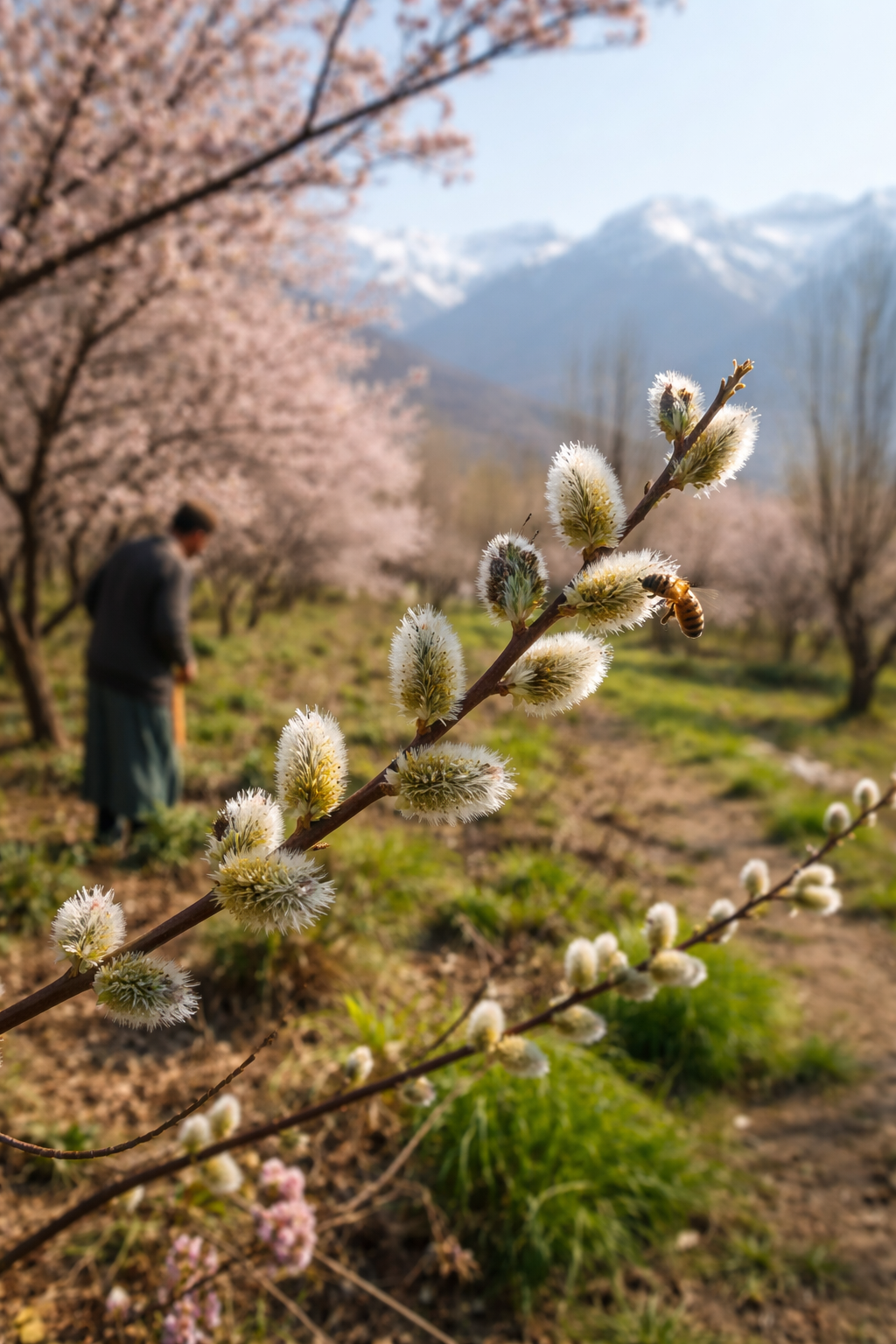
SRINAGAR, Feb 22: Above-normal February temperatures, combined with reduced precipitation, have accelerated plant growth across Kashmir, triggering premature blooming in several crops and ornamental species and raising alarm among growers and experts.
The early flowering, reported from multiple districts, is occurring weeks ahead of the usual March bloom. Horticulturists warn that the shortened dormancy period has disrupted natural growth cycles, which could impact fruit set, yield and overall crop health if the trend persists.
Agrometeorologists attribute the shift to a sustained rise in both minimum and maximum temperatures. Dr Sameera Qayoom of Sher-e-Kashmir University of Agricultural Sciences and Technology of Kashmir said the Valley is witnessing temperatures typically recorded in March.
“Plants require a fixed number of heat units to move from one growth stage to another. This year, those heat units accumulated earlier, pushing plants into the blooming stage ahead of time,” she said, noting that February temperatures are hovering up to nine degrees above normal in some areas.
Qayoom recalled a similar spike nearly 22 years ago, when the mercury briefly touched 25 degrees Celsius in February before rainfall cooled conditions. “Currently, no significant rainfall is forecast in the coming days. If high temperatures continue, early blooming could spread to more crops and plant species,” she warned.
Growers say the impact is already visible. Imtiyaz Ahmad, a local resident, said shifting weather patterns are altering growth cycles. “Extreme heat affects everything—humans, plants and even water. We are seeing its effects earlier than ever,” he said.
Florists report striking changes as well. Anwar Dar from Lal Chowk said several plants have flowered nearly a month ahead of schedule. “The Salix plant, locally known as ‘Bred Mushk’, is already in full bloom, though it usually flowers in March,” he said.
Experts caution that declining rainfall and reduced snowfall over recent years have further disturbed ecological rhythms, intensifying concerns over the long-term consequences for Kashmir’s horticulture and fragile environment.


