


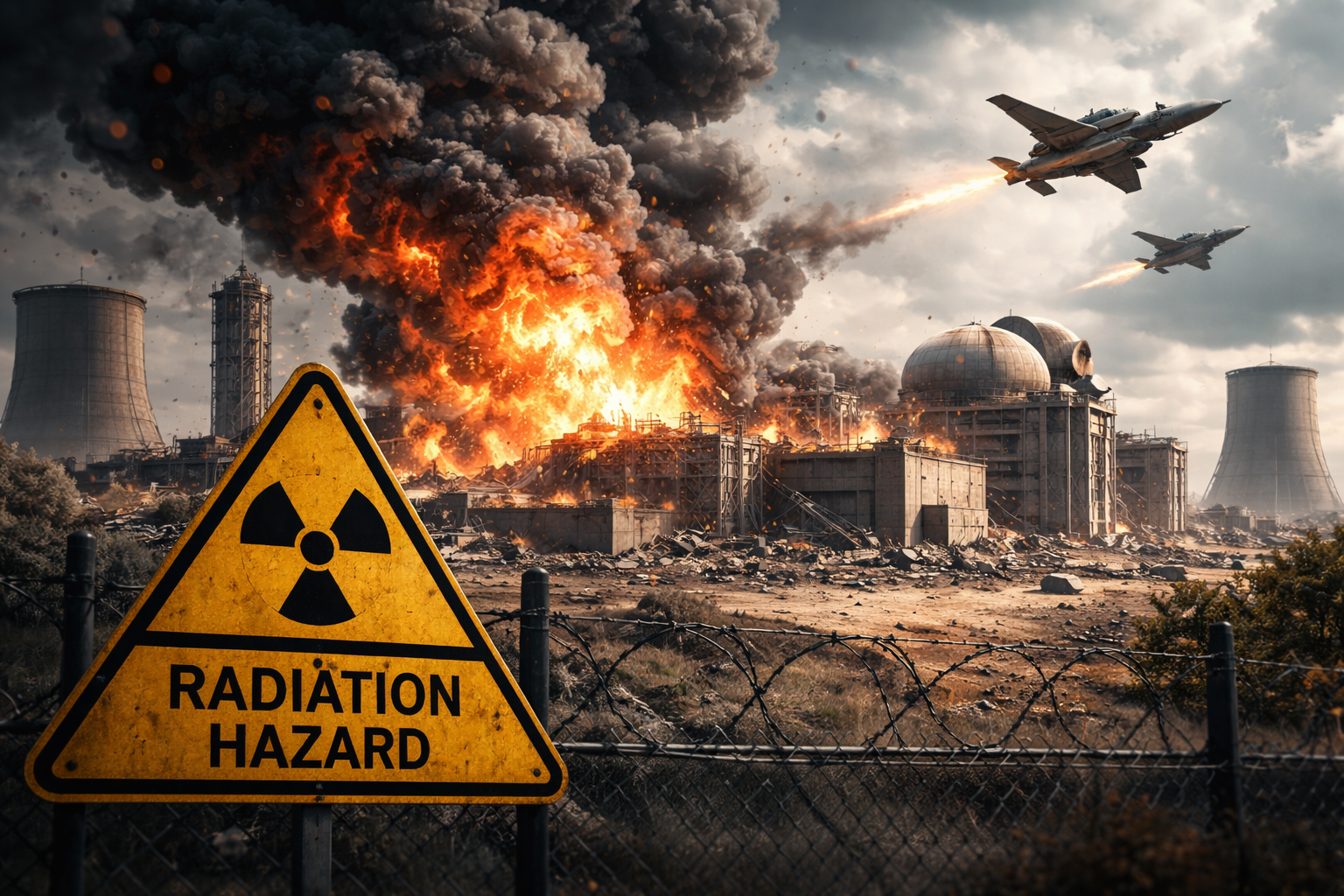
When a nuclear facility like the is struck during a military conflict, the consequences depend heavily on what part of the facility is hit and how severe the damage is. Let’s break it down clearly:
1️⃣ If Non-Nuclear Buildings Are Hit
If the strike damages administrative buildings, power systems, or entrances, the impact may be limited to:
- Structural destruction
- Fire or conventional explosions
- Temporary shutdown of operations
In this case, there may be no radiation leak at all.
2️⃣ If Enrichment Areas Are Damaged
Facilities like Natanz house centrifuges that enrich uranium. If these areas are hit:
- Uranium gas (UF6) could leak
- Chemical hazards may occur
- Limited radioactive contamination could spread locally
However, enrichment plants are not nuclear reactors, so they do not contain large amounts of highly radioactive spent fuel like power plants do.
3️⃣ Worst-Case Scenario: Major Radiological Release
If a strike causes:
- Explosion inside uranium storage areas
- Fire spreading radioactive materials
- Damage to containment systems
Then radioactive particles could be released into the air.
Possible effects:
- Health risks (respiratory exposure)
- Contaminated soil and water
- Long-term environmental damage
- Cross-border fallout depending on wind direction
This is what experts fear most — even if the probability is low.
4️⃣ What About a Nuclear Explosion?
A strike cannot cause a nuclear bomb-style explosion at a civilian enrichment site.
Why?
Nuclear weapons require highly specific triggering mechanisms. Bombing a facility would cause conventional explosions, not a nuclear detonation.
5️⃣ Role of Global Watchdogs
The (IAEA) monitors such facilities. If damage occurs, it:
- Assesses radiation levels
- Warns neighboring countries
- Urges restraint
- Sends inspection teams if possible
The IAEA repeatedly stresses that attacking nuclear sites risks consequences beyond borders.
Why This Matters Globally 🌍
Even limited radiation leaks can:
- Raise panic in financial markets
- Escalate regional tensions
- Trigger humanitarian concerns
- Impact global diplomacy
That’s why strikes involving nuclear facilities are viewed as extremely sensitive and dangerous.
!


