


Amreen Shah
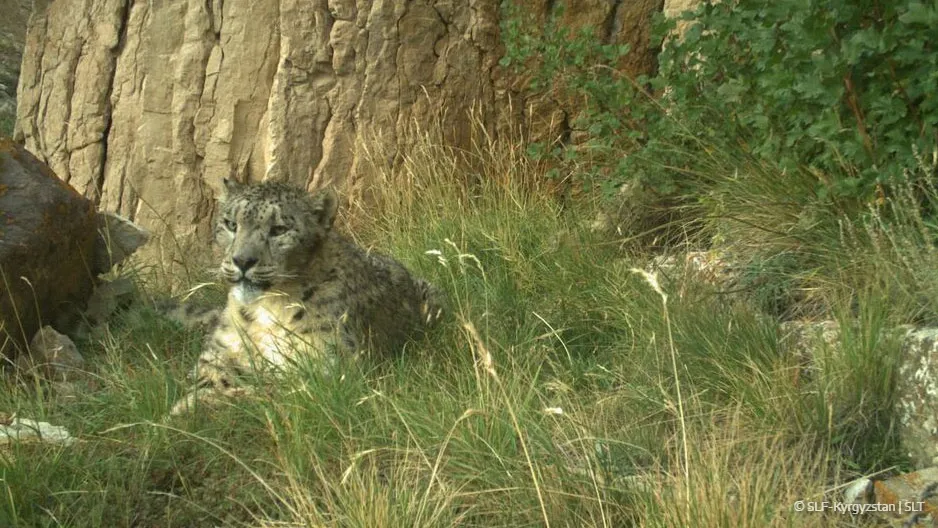
Srinagar: The Government of India has completed the country’s first nationwide Snow Leopard Census, officially titled the Snow Leopard Population Assessment in India (SPAI), revealing the presence of nine snow leopards in Jammu and Kashmir. The findings were released on January 30, 2024, by the Ministry of Environment, Forest and Climate Change (MoEFCC).
According to the assessment, India’s total estimated snow leopard population stands at 718 individuals. Ladakh recorded the highest numbers with 477 snow leopards, followed by Uttarakhand with 124, Himachal Pradesh with 51, Arunachal Pradesh with 36, Sikkim with 21, and Jammu and Kashmir with nine.
The SPAI marks the first systematic and scientific effort to estimate snow leopard populations in India. Conducted between 2019 and 2023, the assessment covered nearly 1.20 lakh square kilometres of high-altitude habitat, accounting for over 70 percent of the species’ potential range in the country. The exercise adopted a rigorous two-stage framework, combining occupancy-based sampling to map spatial distribution with camera-trap-based abundance estimation across stratified landscapes.
During the assessment, survey teams traversed more than 13,450 kilometres for sign surveys and deployed camera traps at 1,971 locations, generating around 1.8 lakh camera-trap nights. As many as 241 individual snow leopards were identified through this extensive effort. The exercise was coordinated by the Wildlife Institute of India, Dehradun, with the active participation of all snow leopard range States and Union Territories, along with conservation partners and local NGOs.
The MoEFCC informed that the findings of SPAI will serve as the foundation for a follow-up conservation action plan, with a focus on strengthening long-term population monitoring, structured scientific assessments and enhanced community participation across high-altitude landscapes. The Ministry has already launched the second cycle of the assessment, SPAI 2.0, during Wildlife Week 2025 to further reinforce conservation of the snow leopard, its habitat and associated species.
Snow leopard conservation in India is supported under the Species Recovery Programme of the centrally sponsored scheme for the Development of Wildlife Habitats, under which the species is among 24 identified for focused protection. The Ministry is also implementing key initiatives such as Project Snow Leopard, National Snow Leopard Ecosystem Protection Priorities and the SECURE Himalaya programme, aimed at conserving high-altitude ecosystems while improving the livelihoods of local communities.
The snow leopard enjoys the highest level of legal protection in India under Schedule I of the Wildlife Protection Act, 1972. Long-term conservation efforts are being pursued through expansion and improved management of protected areas, landscape-level planning, community-based stewardship and science-driven monitoring, supported by inter-agency coordination to safeguard fragile Himalayan ecosystems, including those in Jammu and Kashmir.


