


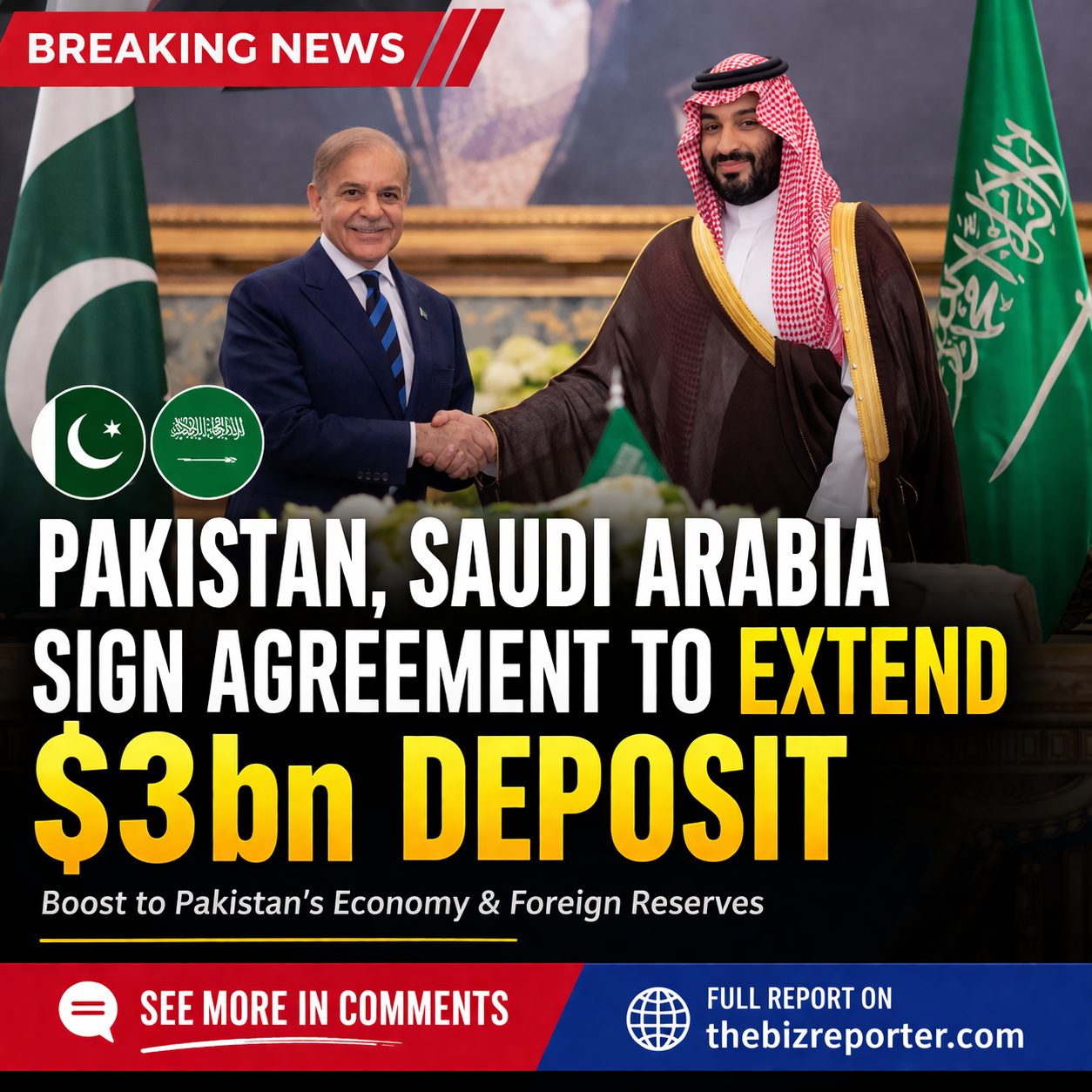
Karachi, Apr 17 (PTI) Saudi Arabia has reached an agreement with the State Bank of Pakistan which allows for an extension in the maturity of a USD 3 billion deposit with the central bank, it was announced Friday.
The announcement comes a day after the SaudiA Fund for Development deposited USD 2 billion of the USD 3 billion on Thursday with the State Bank of Pakistan (SBP), bringing a major boost to the country’s skewed foreign reserves.
“The agreement, signed between the SaudiA Fund for Development (SFD) and the State Bank of Pakistan (SBP), provides for the extension in the maturity of a USD 3 billion deposit placed by SFD with the State Bank of Pakistan,” said a post on X by the Ministry of Finance.
The Finance Ministry said that the agreement was signed between SBP Governor Jameel Ahmed and Chief Executive Officer of the SFD Sultan bin Abdulrahman Al-Marshad.
Minister for Finance and Muhammad Aurangzeb witnessed the signing of an important financial agreement in Washington, DC, in the presence of Pakistan’s Ambassador to the United States.
The development took place on the sidelines of the World Bank-IMF Spring Meetings.
Saudi Arabia on Tuesday extended its USD 5 billion facility for a further three years and had also pledged the additional USD 3 billion deposits for Pakistan.
With this fresh loan, Saudi Arabia has become the single largest country to have placed a total of USD 8 billion in cash deposits with Pakistan’s central bank.
The ministry added that the extension of the deposit reflects “strong and longstanding economic partnership between Pakistan and the Kingdom of Saudi Arabia” and will support the country’s external sector stability.
“This assistance aims at supporting Pakistan’s economy and strengthening its resilience amidst evolving global economic challenges,” the Saudi Press Agency reported.
It comes “in accordance with the leadership’s directives to strengthen the bonds of brotherhood between the two countries, affirming the kingdom’s commitment to fostering the economic growth of Pakistan, which is expected to reflect positively on the living conditions of Pakistani citizens,” it added.
The transfer of the funds – the amount was received by the State Bank of Pakistan on April 15, 2026 – coincided with Prime Minister Shehbaz Sharif’s visit to Saudi Arabia in a bid to promote peace in West Asia.
Finance Minister Aurangzeb said in the USA that the existing USD 5 billion Saudi deposit would no longer be subject to the previous annual rollover arrangements and would be extended for a longer term.
On Wednesday, Sharif said Saudi Arabia’s support came at a “critical time” for Pakistan’s external financing needs and would help “reinforce foreign exchange reserves and strengthen the country’s external account.”
The USD 3 billion support was announced as Islamabad prepares to repay USD 3.5 billion to the United Arab Emirates (UAE) this month, a step that can bring its foreign reserves under pressure.
The International Monetary Fund (IMF) has stipulated that Pakistan’s three key bilateral creditors — Saudi Arabia, China and the UAE — must maintain their cash deposits with the country until the completion of the ongoing three-year programme.
Sharif said the government is committed to maintaining reserves in line with its market obligations and targets under the IMF-supported programme, including the goal of building reserves to around USD 18 billion — equivalent to roughly 3.3 months of import cover — by the end of the fiscal year.
Due to the uncertain global economic situation and the rising oil prices in wake of the West Asia conflict, there is an increasing pressure on the country’s external account position even when Pakistan is playing mediator to bring peace and hosted talks between Iran and the US over the weekend.
According to official figures, Pakistan’s foreign exchange reserves stood at USD 16.4 billion as of March 27, sufficient to cover close to three months of imports. However, the repayment requirement from the UAE had added fresh pressure on the country’s external buffers.
In March, Islamabad failed to secure an agreement with the UAE to roll over the USD 3.5 billion facility, marking the first such failure in seven years and raising concerns about near-term financing gaps.


