


The Biz Reporter
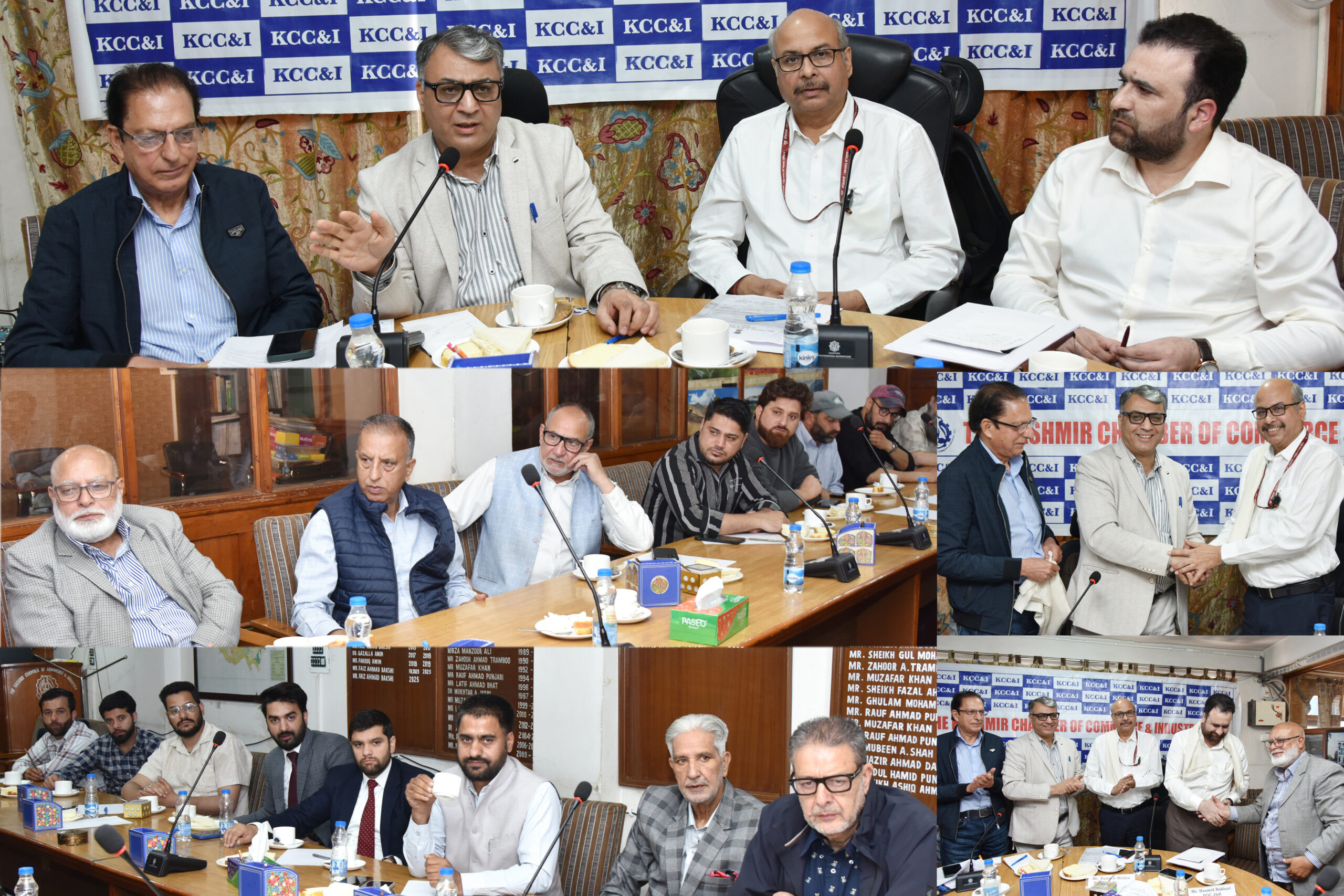
Srinaar: The Kashmir Chamber of Commerce and Industry convened an interactive session at its office with Mr. Ramesh Mishra, Regional Director (North), Ministry of Corporate Affairs, Government of India, and Mr. Haamid Bukhari, Registrar of Companies (RoC), Jammu & Kashmir and Ladakh.
President KCCI, Mr Javid Ahmad Tenga, welcomed the visiting officials and presented a comprehensive set of concerns affecting companies, professionals, and stakeholders across Jammu & Kashmir. The meeting was attended by past presidents, members of the Executive Committee, chartered accountants, company secretaries, and representatives of various companies and institutions.
The President noted that this was the first time a Regional Director from the Ministry of Corporate Affairs had visited the Chamber office for direct interaction with the business community, and expressed gratitude for the outreach initiative.
KCCI highlighted a range of structural and operational issues. These included limited participation of J&K-based companies in the Prime Minister’s Internship Scheme, challenges related to Director Identification Numbers (DIN) and associated penalties, delays in updating company records, absence of an effective grievance redressal mechanism, and the need for a one-time settlement scheme for closure of inactive companies.
The Chamber strongly urged that the RoC office in Srinagar be made fully functional on the earlier Darbar Move pattern, stating that the office has become largely defunct with no effective staff presence. It was pointed out that stakeholders are often asked to route issues to the Jammu office, causing delays and inconvenience. KCCI emphasised that the matter is critical as the Kashmir Valley accounts for nearly 55 percent of the total companies in the Union Territory.
KCCI also raised concerns regarding difficulties faced by stakeholders in Ladakh and requested the establishment of a camp office or at least a functional helpdesk in the region to facilitate ease of access to RoC services.
On the Prime Minister’s Internship Scheme, the Chamber described the initiative as ambitious but questioned its implementation in J&K, noting that only one company from the region—J&K Bank—features among the 2,000 participating companies. It highlighted the imbalance between the large number of applicants from J&K and the limited availability of local opportunities, and urged the Ministry to facilitate greater participation of companies from other states to benefit local youth.
Further, KCCI raised serious concerns regarding persistent technical glitches on the MCA21 portal, including server downtime, non-availability of forms, failed SRN generation, payment failures, and issues in uploading and retrieving documents. These issues have contributed to delays in incorporation and approvals, difficulties in accessing historical company records, delays in approval of charge forms (CHG-1, CHG-4, CHG-9), and complications in Section 8 company registrations.
The Chamber also flagged pendency in adjudication and compounding matters, recurring issues in Director KYC filings, DIN activation, and DSC validation, as well as lack of clarity in compliance requirements for small companies, startups, and producer companies. Delays in inspections, inquiries, and complaint resolution were also highlighted as affecting business confidence.
Additionally, KCCI reiterated concerns regarding multiple DINs issued in the past due to lack of awareness. Under current provisions, such cases attract a fixed penalty of ₹50,000 along with an additional fine of ₹500 per day, resulting in substantial financial burden. The Chamber demanded a one-time amnesty scheme to address these legacy issues.
Responding to the concerns, Ramesh Mishra stated that the issues raised by KCCI were substantive and reflected genuine operational challenges faced by stakeholders in the region.
Addressing DIN-related penalties and adjudication, he noted that the Ministry is aware of stakeholder apprehensions regarding heavy penalties. He emphasized the importance of continued engagement, stating that such interactions provide direct feedback from the ground and help align policy with practical realities.
Mr. Haamid Bukhari, Registrar of Companies, J&K and Ladakh, stated that many of the issues raised, particularly those related to DIN KYC, DSC validation, and form processing delays, are largely system-driven. He assured stakeholders that the office remains committed to facilitating resolution of genuine grievances.
On institutional outreach, Mr. Bukhari stated that such interactive sessions would be institutionalised and held at least once every six months to ensure continuous engagement and structured resolution of issues.
The session concluded with a detailed exchange of views, with KCCI reiterating its commitment to working closely with the Ministry of Corporate Affairs to improve regulatory efficiency, reduce compliance burden, and strengthen the corporate ecosystem in Jammu & Kashmir.


