


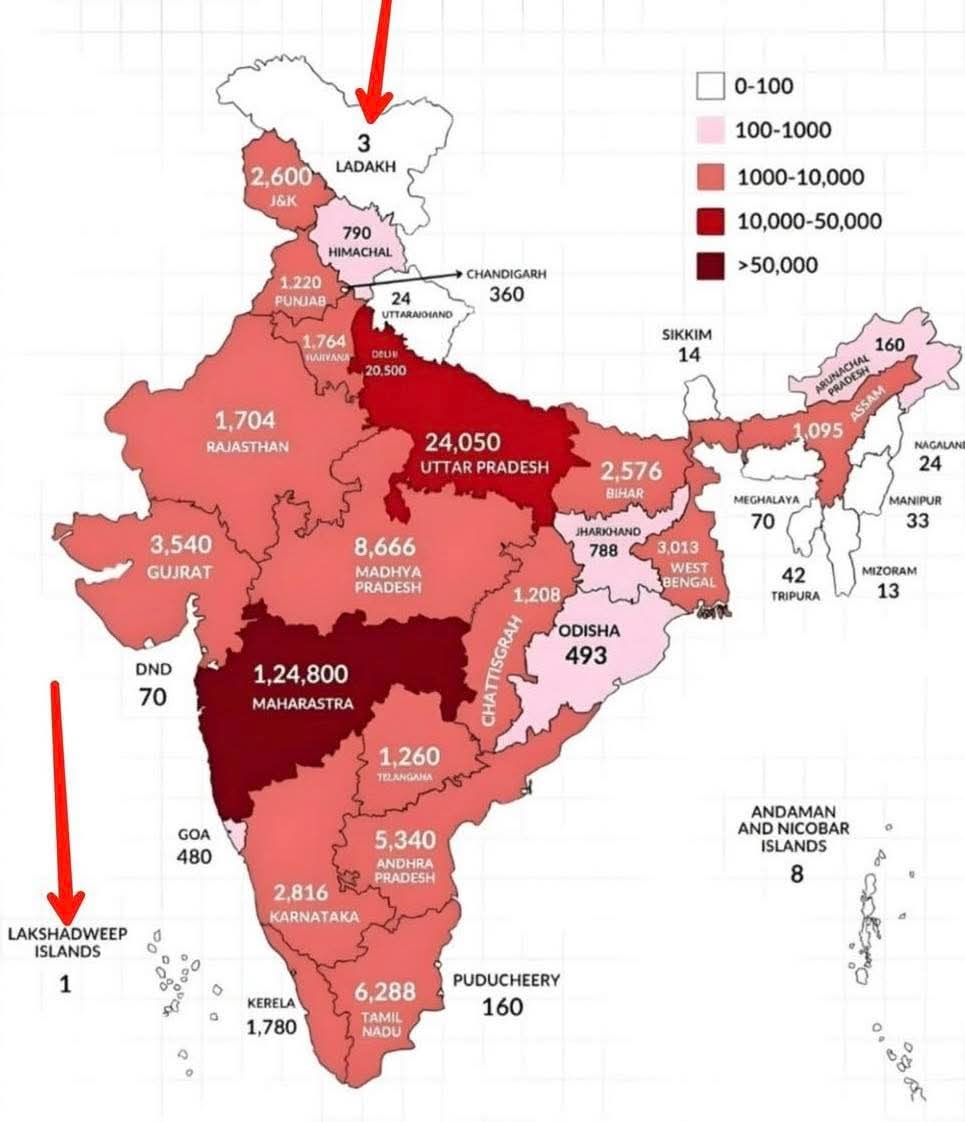
Srinagar/Jammu, February 16, 2026 – According to the latest wealth distribution data across India, Jammu & Kashmir has 2,600 individuals in the crorepati category. While this represents a substantial number in absolute terms, the Union Territory continues to lag significantly behind major economic powerhouses and even some neighboring states in wealth concentration.
The Numbers in Context
The data reveals a stark economic hierarchy across India. Maharashtra dominates with 1,24,800 crorepatis – nearly 48 times more than J&K. Uttar Pradesh follows with 24,050, Delhi with 20,500, and states like Madhya Pradesh (8,666), Kerala (6,288), Tamil Nadu (6,288), and Andhra Pradesh (5,340) all substantially outpace Jammu & Kashmir.
What’s particularly noteworthy is that J&K’s count of 2,600 crorepatis places it in the mid-lower tier among Indian states and Union Territories, despite its strategic location, natural resources, and tourism potential.
Regional Comparisons Raise Questions
When compared to neighboring and similarly-sized regions, the disparity becomes more apparent:
- Gujarat – with comparable population – has 3,540 crorepatis
- Rajasthan records 1,704
- Haryana shows 1,764
- Even Punjab, a smaller state, has a relatively lower count at 1,220
However, J&K does outperform several states including Himachal Pradesh (790), Chhattisgarh (788), and all the northeastern states, indicating that while behind economic leaders, the region isn’t at the bottom of the wealth ladder.
Why the Gap Persists
Economic analysts point to several factors that have historically constrained wealth creation in J&K:
Decades of Conflict: Prolonged security challenges have deterred large-scale industrial investment and disrupted business continuity. Uncertainty has traditionally been the enemy of wealth accumulation.
Limited Industrialization: Unlike Maharashtra or Gujarat with their diversified industrial bases, J&K’s economy remains heavily dependent on agriculture, horticulture, handicrafts, and tourism – sectors that, while important, generate fewer ultra-high-net-worth individuals.
Infrastructure Deficits: Despite improvements, connectivity challenges, seasonal accessibility issues, and gaps in digital and physical infrastructure have limited the scale of commercial operations possible in the region.
Capital Flight: Wealthy residents and successful entrepreneurs have historically moved their businesses and investments to metros like Delhi, Mumbai, and Bangalore, where larger markets and better infrastructure offer greater growth potential.
Seasonal Economic Activity: The harsh winter months in many parts of J&K restrict year-round business operations, particularly affecting tourism and construction sectors.
The Positive Side
Despite lagging behind national leaders, J&K’s 2,600 crorepatis represent a significant wealth base that contributes to:
- Local economic activity and employment
- Tax revenues for development
- Investment in real estate, hospitality, and trade
- Philanthropic activities and community development
The number also suggests that wealth creation is happening, even if at a slower pace than in more industrialized states.
Sectoral Breakdown
While detailed sectoral data isn’t available, local economic observers indicate that J&K’s crorepatis primarily come from:
- Apple and saffron trading – Kashmir’s horticulture sector generates significant wealth
- Tourism and hospitality – Hotels, houseboats, and travel businesses
- Real estate development – especially in Srinagar and Jammu
- Wholesale trade – dry fruits, handicrafts, and traditional goods
- Healthcare and education – private hospitals and educational institutions
Government Initiatives
The J&K administration has launched several initiatives aimed at boosting economic activity and wealth creation:
- New industrial policy with tax incentives
- Tourism infrastructure development projects
- Startup incubation centers in Srinagar and Jammu
- Skill development programs aligned with market needs
- Improved road and digital connectivity
“We’re working systematically to create an enabling environment for business and entrepreneurship,” said a government spokesperson. “The improved security situation and infrastructure investments are beginning to show results.”
What Needs to Change
Development economists suggest that for J&K to bridge the gap with leading states, several things must happen:
- Sustained Peace and Stability – Essential for building long-term investor confidence
- Diversification – Moving beyond traditional sectors into IT, manufacturing, and services
- Ease of Doing Business – Streamlined regulations and faster approvals
- Retaining Talent – Creating opportunities so local entrepreneurs don’t migrate
- Market Access – Better integration with national and international markets
- Year-Round Economy – Developing sectors less affected by seasonal variations
Local Voices
Farooq Ahmed, a Srinagar-based entrepreneur, reflected: “We have the potential to do much better. The apple trade alone generates billions, and tourism could be worth even more with proper development. What we need is consistent policy support and infrastructure that matches other states.”
Priya Malhotra, an economist studying regional development, added: “J&K’s 2,600 crorepatis show there’s wealth being created, but the concentration in just a few sectors is concerning. Economic diversification is crucial for sustainable growth.”
The Road Ahead
While J&K’s crorepati count of 2,600 places it well behind economic powerhouses like Maharashtra, Delhi, and Gujarat, it’s not an insurmountable gap. With the right policies, sustained peace, infrastructure development, and entrepreneurial support, the region has the potential to significantly boost its wealth creation.
The challenge for policymakers is to convert J&K’s natural advantages – its strategic location, tourism potential, agricultural wealth, and human capital – into sustainable economic growth that creates more high-net-worth individuals and, more importantly, lifts the broader population’s living standards.
As India continues its march toward becoming a developed economy, ensuring balanced regional development remains critical. For Jammu & Kashmir, the 2,600 crorepatis represent both current achievement and untapped potential.
]


