


Health Crisis Emerges as Union Territory Ranks Third Nationally in Childhood Lipid Disorders
Minha Qadri
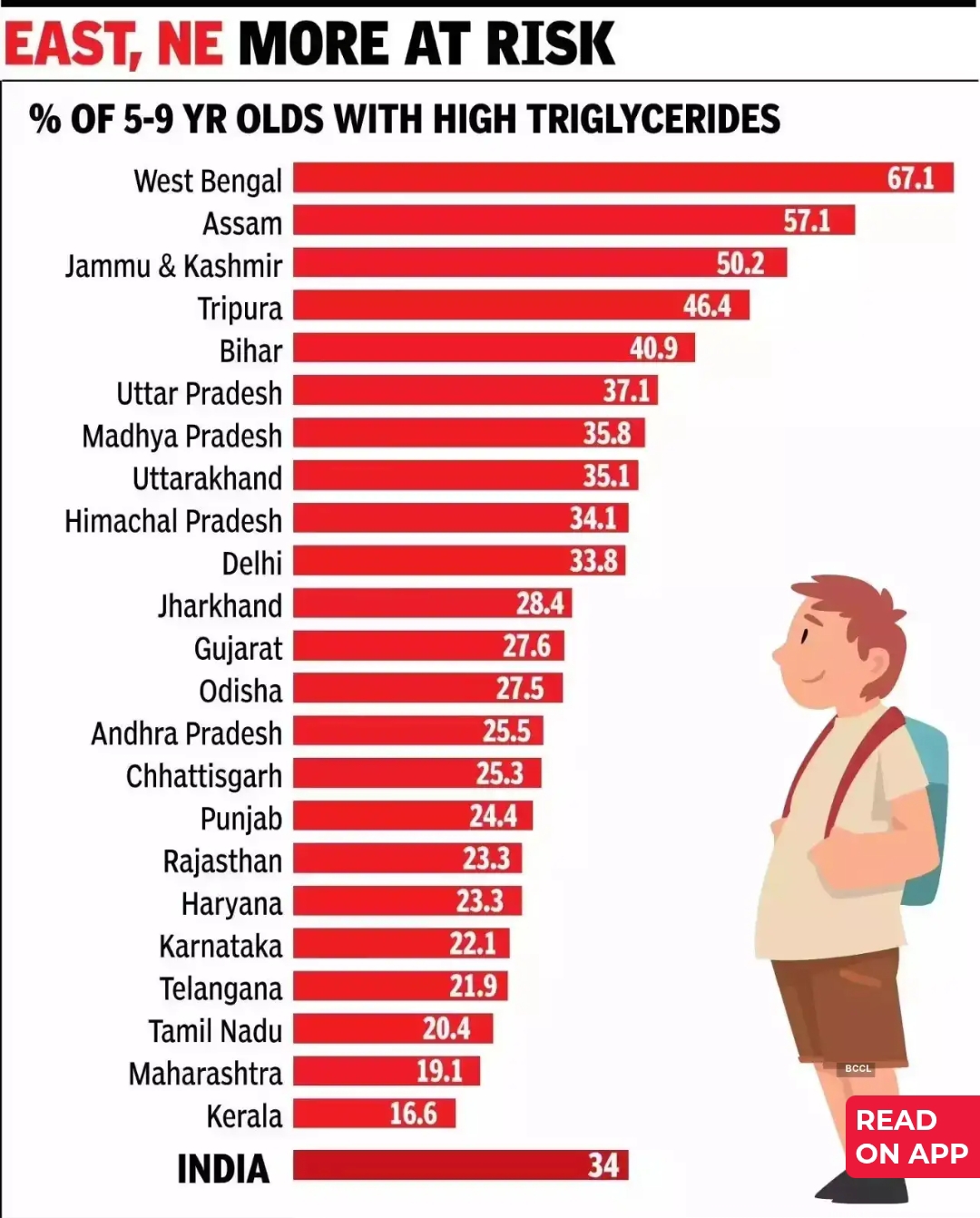
Srinagar, Sep 28 – Jammu and Kashmir has emerged as a major concern in India’s growing childhood health crisis, with a staggering 50.2% of children aged 5-9 years showing high triglyceride levels, according to the latest “Children in India, 2025” report.
The union territory ranks third nationally in this alarming statistic, trailing only West Bengal (67.1%) and Assam (57.1%). This places J&K significantly above the national average of 34%, highlighting a severe public health challenge that demands immediate attention.
A Silent Health Emergency
The data reveals that one in every two young children in Jammu and Kashmir is at risk of developing serious cardiovascular complications later in life. High triglycerides in children are typically linked to poor dietary habits, sedentary lifestyles, and in some cases, genetic predisposition.
Dr. Rajesh Kumar, a pediatric cardiologist, expressed deep concern over the findings. “These numbers are not just statistics—they represent thousands of children whose health trajectories are being compromised at a very young age. High triglycerides can lead to pancreatitis, fatty liver disease, and increased cardiovascular risk in adulthood.”
Regional Disparities Tell a Story
What makes J&K’s situation particularly noteworthy is its position among predominantly eastern and northeastern states that dominate the top of this concerning list. While states like Kerala (16.6%) and Maharashtra (19.1%) show significantly lower rates, J&K’s 50.2% figure suggests region-specific factors may be at play.
The contrast is stark when compared to southern states—Tamil Nadu records 20.4%, Karnataka shows 22.1%, and Telangana reports 21.9%, all less than half of J&K’s rate.
Potential Contributing Factors
Health experts point to several possible causes for the high prevalence in Jammu and Kashmir:
Dietary Changes: The traditional Kashmiri diet, rich in rice, meat, and dairy products, combined with increasing consumption of processed foods, may be contributing to lipid imbalances in children.
Climate and Lifestyle: Long winter months leading to reduced physical activity, coupled with comfort eating patterns during harsh weather conditions, could be influencing these statistics.
Socioeconomic Factors: Limited access to fresh fruits and vegetables during certain seasons, along with economic constraints, may be pushing families toward less nutritious but more affordable food options.
Expert Recommendations
Nutritionist Dr. Shabnum Rashid emphasizes the need for immediate intervention: “We need comprehensive dietary counseling for families, school-based nutrition programs, and community awareness campaigns. The focus should be on returning to traditional, balanced eating patterns while incorporating more physical activity into children’s daily routines.”
The Path Forward
The Jammu and Kashmir Health Department has indicated plans to launch targeted screening programs in schools and primary health centers. Officials are also considering partnerships with educational institutions to implement mandatory physical education programs and nutritional guidelines for school meals.
“These findings serve as a wake-up call. We are immediately initiating a task force to develop comprehensive strategies addressing childhood nutrition and lifestyle factors. Prevention at this age is crucial for the long-term health of our population.”
National Context
The report’s broader findings indicate that childhood lipid disorders are becoming a pan-Indian crisis, with the national average of 34% already representing millions of affected children. However, J&K’s position in the top three demands urgent, localized public health interventions.
As health officials scramble to address this emerging crisis, the focus remains clear: immediate action is needed to prevent a generation of children from facing preventable health complications in their adult years. The statistics from Jammu and Kashmir serve as both a warning and a call to action for comprehensive healthcare reform targeting the youngest and most vulnerable population.


