


The Biz Reporter
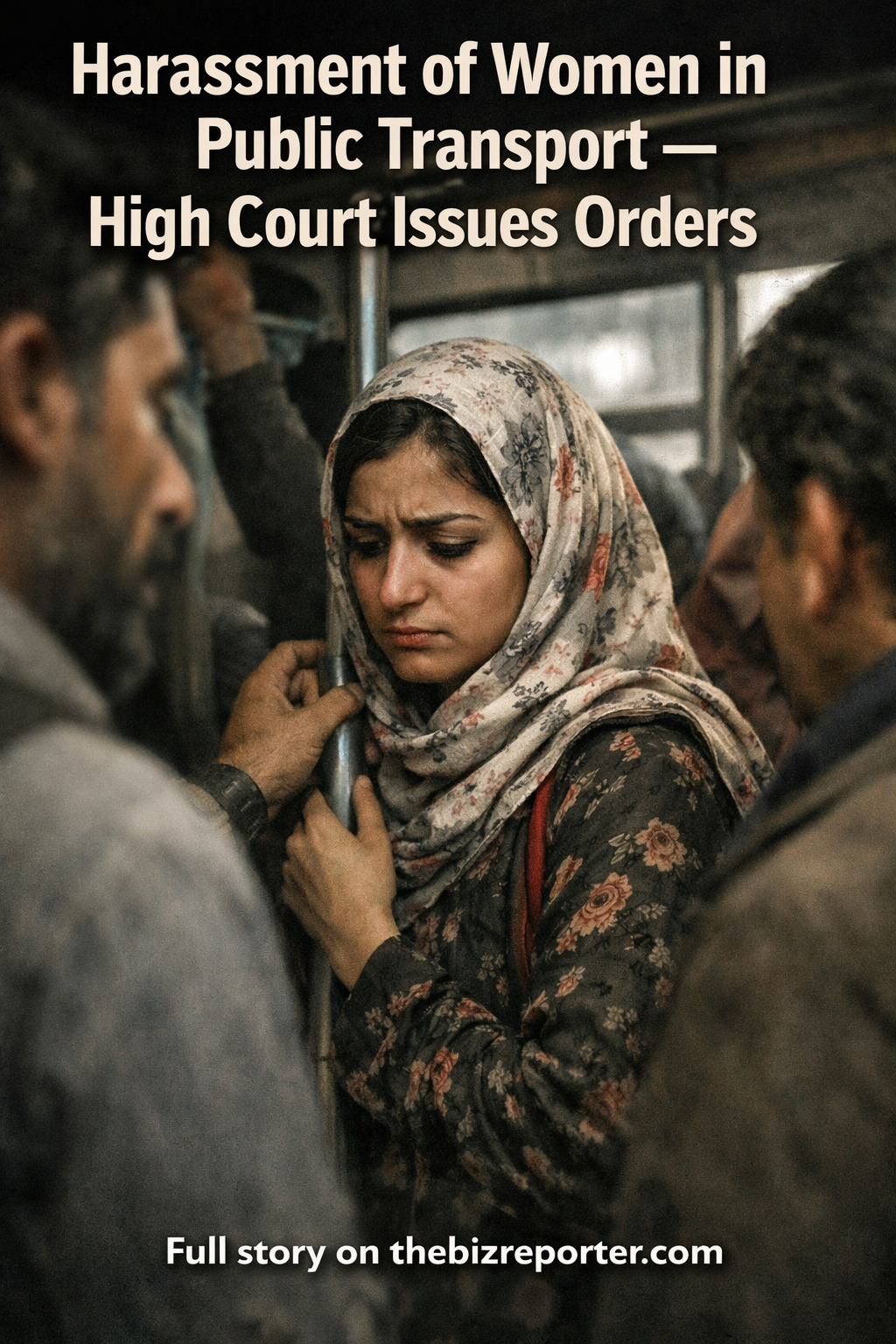
Srinagar : The High Court of Jammu & Kashmir and Ladakh has taken serious note of systemic lapses in ensuring women’s safety and the enforcement of reserved seating in public transport across the Union Territory, and has sought a response from the government.
The matter came up before a division bench comprising Chief Justice Arun Palli and Justice Rajnesh Oswal, while hearing a Public Interest Litigation (PIL) filed by Advocate Monisa Manzoor Mir.
The PIL highlights the non-implementation of a Transport Department circular dated January 7, 2025, which mandates reservation of seats for women—Seats 1 to 12 in large buses and Seats 1 to 9 in mini-buses. Despite the directive being in force for over a year, the petitioner contended that there has been little to no enforcement on the ground.
According to the petition, information obtained under the Right to Information (RTI) Act from the Transport Commissioner and the Regional Transport Office (RTO) Kashmir revealed that no regular inspections were conducted, no penalties imposed on violators, and no functional public helpline existed to address complaints related to women’s safety.
The PIL further states that although Flying Squads were reportedly constituted by the RTO, no documentary or field-level evidence was produced to demonstrate their effective functioning.
An internal survey cited in the petition, conducted among 298 women from various educational institutions, revealed that nearly 85.6 per cent respondents had experienced harassment or discomfort while travelling in public transport. A majority of them were also unaware of any formal grievance redressal mechanism.
Advocate Mir also drew the court’s attention to successful initiatives adopted in other states, including Delhi’s “Pink Tickets”, Karnataka’s “Tejaswini Buses” and women-centric travel schemes such as “Shakti” in Maharashtra and Tamil Nadu, arguing that effective safety measures can be implemented without major legislative changes.
During the proceedings, Government Advocate Illyas Nazir Laway accepted notice on behalf of the respondents and sought time to obtain instructions and file a detailed response.
The court granted time to the government and adjourned the matter to March 4, directing that a comprehensive reply be filed by then.


