


The Biz Reporter
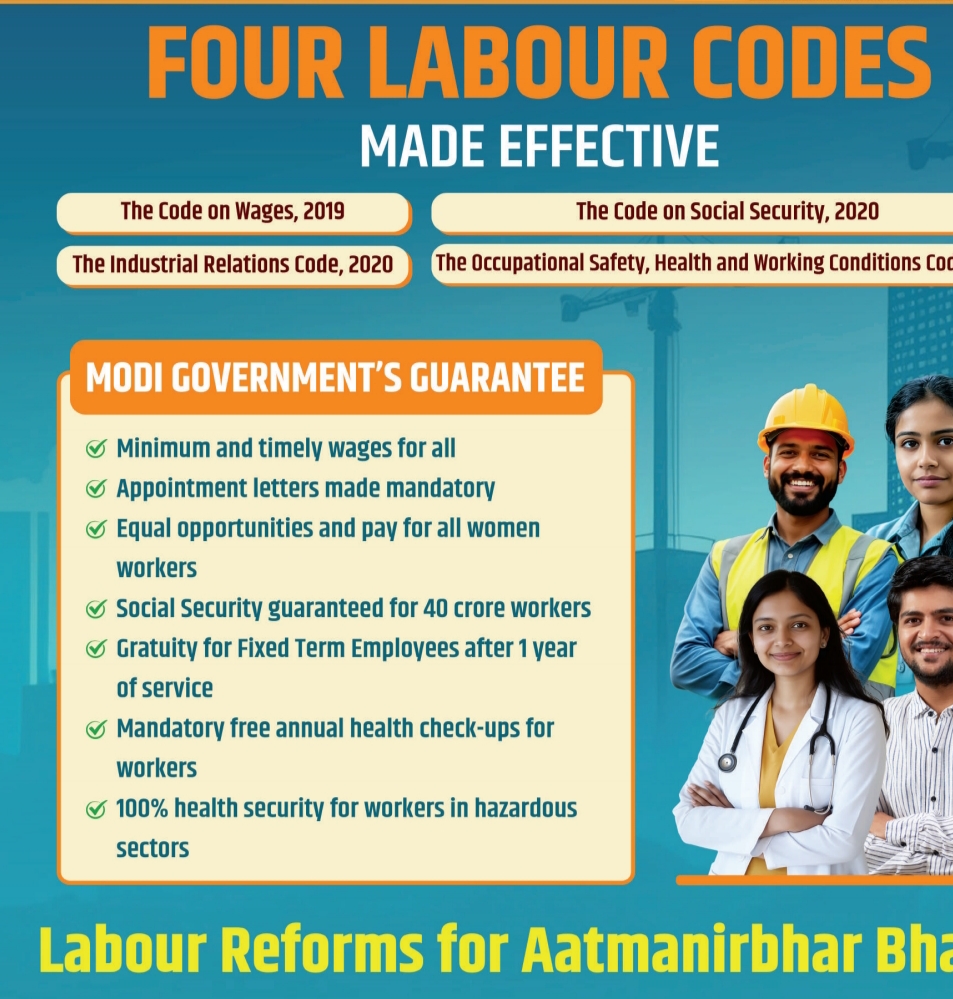
NEW DELHI, Nov 22: In a landmark overhaul of India’s labour laws, the Central Government has officially implemented all four comprehensive Labour Codes, replacing 29 fragmented pieces of legislation. This move is being hailed as a major step towards formalizing employment, ensuring workplace equality, and providing a robust social security net that finally extends to gig and platform workers.
For millions of workers across the organised and unorganised sectors, the new codes bring immediate and significant changes to salaries, working conditions, and retirement benefits.
1. Guaranteed Income and Timely Wages (Code on Wages, 2019)
The Code on Wages establishes a statutory right to a minimum wage for all workers, regardless of the sector or employment type. This key provision eliminates regional disparity and ensures that no state can fix minimum wages below the Central Government’s determined National Floor Wage, guaranteeing a decent standard of living.
Key Payout Changes:
- Universal Minimum Wage: Statutory minimum wage now covers all employees across the country.
- Timely Payments: The payment of wages is now a mandatory compliance requirement for all employers. For sectors like IT and ITES, salaries must be released by the 7th of every month.
- Overtime Pay: Employees working beyond the normal working hours must be compensated at a rate of at least twice their normal wage.
- Equal Pay: The Code strictly prohibits discrimination based on gender (including transgender identity) in recruitment and pay for the same work or work of a similar nature.
2. Expanded Social Security and Gratuity (Code on Social Security, 2020)
The Social Security Code dramatically widens the safety net, making benefits like Provident Fund (PF), Employees’ State Insurance Corporation (ESIC), and gratuity accessible to categories of workers previously excluded.
Transformative Benefits for Specific Groups:
- Gig and Platform Workers: For the first time, gig workers (like those in food delivery and ride-hailing services) and platform workers are formally recognised. Aggregators are now mandated to contribute between 1-2% of their annual turnover (capped at 5% of worker payouts) towards social security and welfare schemes.
- Fixed-Term Employees (FTEs): FTEs will receive all statutory benefits equivalent to permanent employees, including paid leave and medical cover. Crucially, the eligibility for gratuity has been reduced from five years to just one year of continuous service.
- Universal Coverage: ESIC coverage is expanded Pan-India, mandatory for establishments engaging even a single worker in hazardous processes.
3. Safer Workplaces and Work-Life Balance (OSHWC Code, 2020)
The Occupational Safety, Health and Working Conditions Code introduces strict rules focused on the well-being of the workforce:
- Mandatory Appointment Letters: Every worker must be issued a formal, written appointment letter clearly stating their designation, wages, and social security entitlements, promoting transparency and formalization.
- Free Annual Health Check-ups: Employers are now required to provide mandatory free annual health check-ups for all workers above the age of 40.
- Working Hours: Working hours are capped at 48 hours per week, with a limit of 8 to 12 hours per day.
- Women in Night Shifts: Women are now permitted to work in all occupations, including night shifts and hazardous roles, subject to their explicit consent and mandatory safety arrangements provided by the employer.
Employee Guarantee: A Shift Towards Formal Rights
The implementation signals a foundational shift in labour rights. From ensuring minimum wages for all to granting gig workers a stake in social security, these reforms are structured to formalize India’s massive workforce, reduce exploitation, and build a more productive and protected ecosystem for every employee.
:


