


Biz Reporter
By Biz Reporter Desk
April 22, 2026
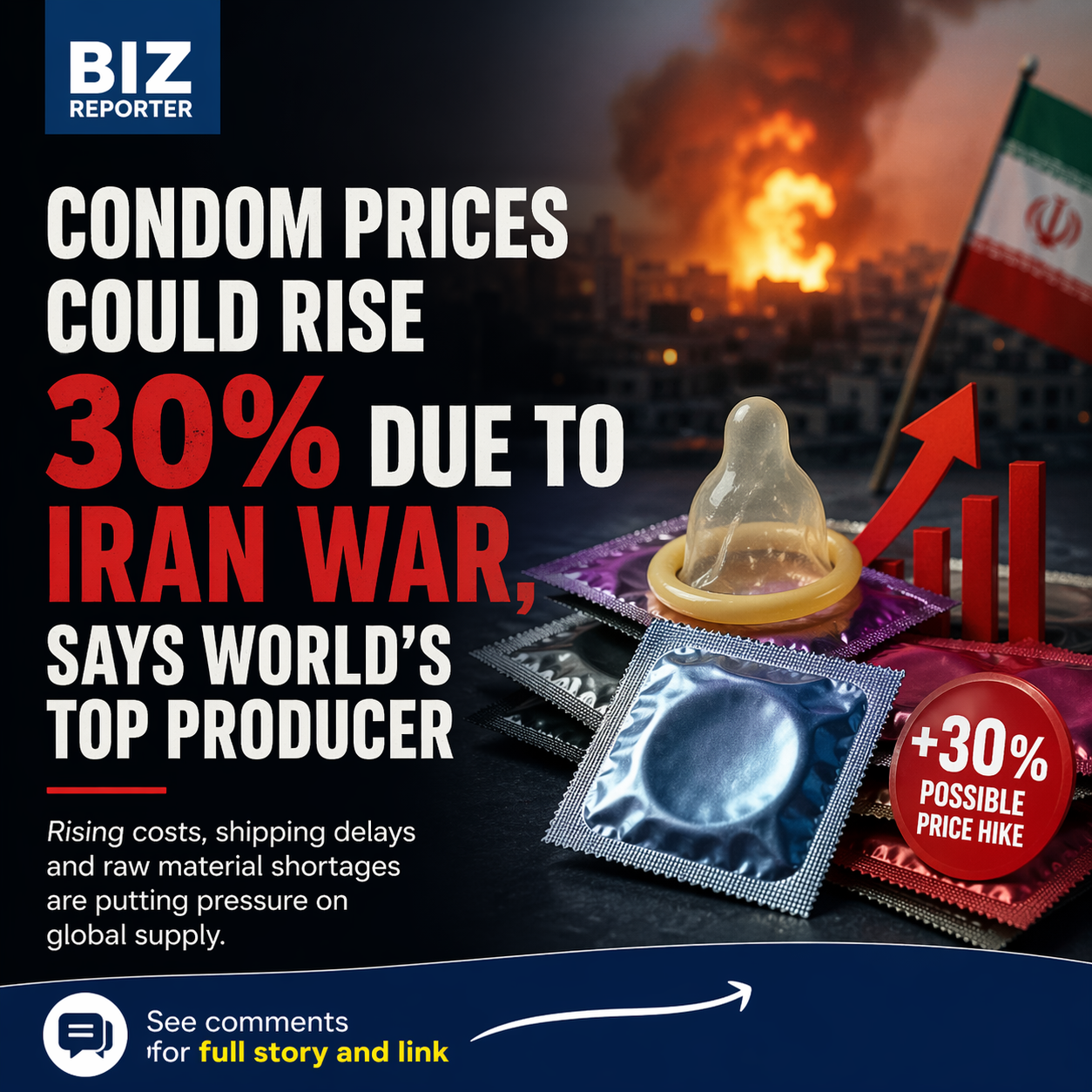
Global condom prices could rise by as much as 20–30 per cent, with the possibility of further increases, as supply chain disruptions linked to the Iran conflict push up manufacturing and shipping costs, the world’s largest producer has warned.
Karex Berhad, which produces more than 5 billion condoms annually, said it is being forced to pass on rising costs to customers as the situation remains “fragile.” The company supplies major global brands such as Durex and Trojan, as well as public health systems and international aid programmes.
Chief executive Goh Miah Kiat said escalating freight charges, delays in shipping routes, and rising raw material costs have significantly impacted operations.
“The situation is definitely very fragile, prices are expensive… We have no choice but to transfer the costs right now to the customers,” he said.
The ongoing conflict has disrupted energy and petrochemical supplies from the Middle East, a key source for materials used in condom manufacturing, including synthetic rubber and nitrile. Prices of packaging inputs such as aluminium foil and silicone oil have also risen sharply.
Karex joins a growing list of manufacturers, including medical glove producers, bracing for prolonged supply bottlenecks as geopolitical tensions ripple through global trade networks.
At the same time, demand for condoms has surged by around 30 per cent this year. Industry experts attribute the spike to supply shortages, declining global stockpiles, and reduced funding for public health procurement—particularly cuts in programmes supported by USAID.
Shipping delays have further worsened the situation. Deliveries that previously took about a month are now taking up to two months to reach markets in Europe and the United States, leaving many regions, especially developing countries, facing shortages.
“We’re seeing a lot more condoms sitting on vessels that have not arrived at their destination but are highly required,” Goh said, warning that access gaps may widen if disruptions persist.
Karex said it currently has sufficient inventory for the next few months and is working to ramp up production to meet growing global demand, even as uncertainty in supply chains continues.


