


The Biz Reporter
Srinagar: For once, politics receded into the background in Srinagar on December 8 as legislators, officials and scientists gathered inside the Jammu and Kashmir Assembly to deliberate on an issue cutting quietly but deeply into the Valley’s rural heartland — the rising incidence of cancer among orchard farmers.
The meeting was convened by the House Committee on Environment, chaired by CPM legislator MY Tarigami, and brought together experts from the health, horticulture and scientific community. Instead of the usual debates over governance or security, the focus shifted to the long-term health consequences of intensive pesticide use in Kashmir’s apple belt.
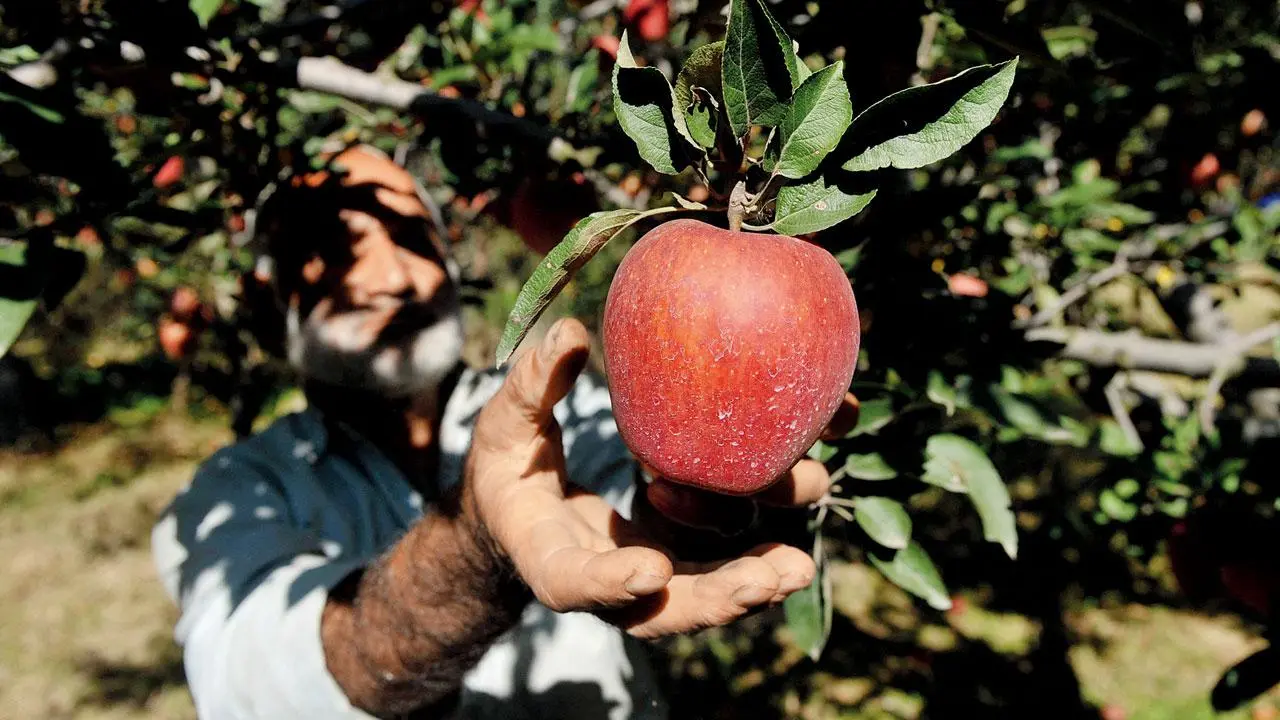
Horticulture remains the backbone of the Valley’s economy, sustaining millions of livelihoods and accounting for over 70 percent of India’s apple production. Yet, for decades, farmers have been routinely exposed to repeated rounds of chemical sprays, often without awareness of the risks involved. Medical researchers have increasingly linked this exposure to serious health disorders, including malignant brain tumours.
A landmark study conducted by the Sher-i-Kashmir Institute of Medical Sciences examined over 400 cancer patients between 2005 and 2008 and identified a “quite strong and possible” association between pesticide exposure and primary brain cancers. Alarmingly high incidences were recorded in core fruit-growing districts such as Baramulla, Anantnag, Budgam, Shopian and Kupwara. Though the findings drew attention at the time, they failed to translate into sustained policy action.
Those concerns have now resurfaced. “We don’t want to create panic among farmers,” Tarigami said, “but when credible data points to a serious health hazard, inaction is not an option.” The committee has sought detailed inputs from scientists and health practitioners to design field-based studies examining exposure levels, chemical composition of sprays and long-term health outcomes.
Experts say pesticide use has intensified sharply over the years. Dr Shahid Rasool, principal scientist at CSIR–IIIM, noted that orchardists today undertake up to 15 rounds of fungicide and insecticide spraying each season, often exceeding recommended limits. “Many believe frequent spraying increases yield, so they spray every 10 to 12 days instead of the advised 18 to 21,” he said, adding that the absence of protective gear significantly heightens health risks.
Parallel research has revealed even deeper concerns. Dr Sobia Nisar of Government Medical College, Srinagar, who has studied populations in Shopian and Pulwama for six years, said pesticide residues have been detected in human blood samples of orchard workers and nearby residents. Her forthcoming study also records higher rates of metabolic disorders and early signs of kidney impairment.
With deliberations now underway, the House Committee is expected to submit recommendations focusing on monitoring mechanisms, research funding and improved safety practices. For a sector central to Kashmir’s economy, the discussions mark a cautious but significant step towards confronting a long-ignored human cost hidden behind the Valley’s apple prosperity.


