


Muheeb Nabi
Srinagar, Aug 16: Food has always been seen as nourishment for both the body and the soul. But in Kashmir, that sacred connection between food and faith now stands shaken. Revelations from HMT locality about a long-running practice of importing cheap, questionable meat and passing it off as quality mutton have sparked outrage, raising serious questions about food safety, religious sanctity, and institutional oversight.
Supplier’s Admission: A Shocking Revelation
In a candid conversation with a reporter, a local meat supplier revealed that he had been trading in cheap imported meat since 2006. “We could easily get a kilogram of meat from outside Kashmir for just Rs 150,” he said, with a matter-of-factness that has stunned many.
By contrast, genuine mutton sells in the Valley at Rs 750 per kilogram, while beef is priced at Rs 400. The gulf in prices has left many residents horrified. “If meat costs Rs 150 a kilogram, then what kind of animal is it coming from? And yet, it was processed into kebabs, ristas, and goshtabas — dishes we serve with pride to our guests,” the supplier admitted.
Restaurants Under the Lens
What has made the revelations more disturbing is the suggestion that it wasn’t just roadside stalls or small eateries involved. According to insiders, even some top restaurants, eager to cut costs and maximize profits, were allegedly sourcing this cheap meat.
A former restaurant employee, requesting anonymity, revealed: “We were asked not to question the source. As long as the supply was steady and cheap, management turned a blind eye. The pressure to keep profit margins high made everyone complicit.”
Religious Concerns: Was the Meat Even Halal?
Beyond questions of hygiene and quality, the revelations have triggered a spiritual crisis for many Kashmiri Muslims. Halal certification is non-negotiable in Islamic dietary laws, and doubts about whether this cheap meat was Halal have shaken faith itself.
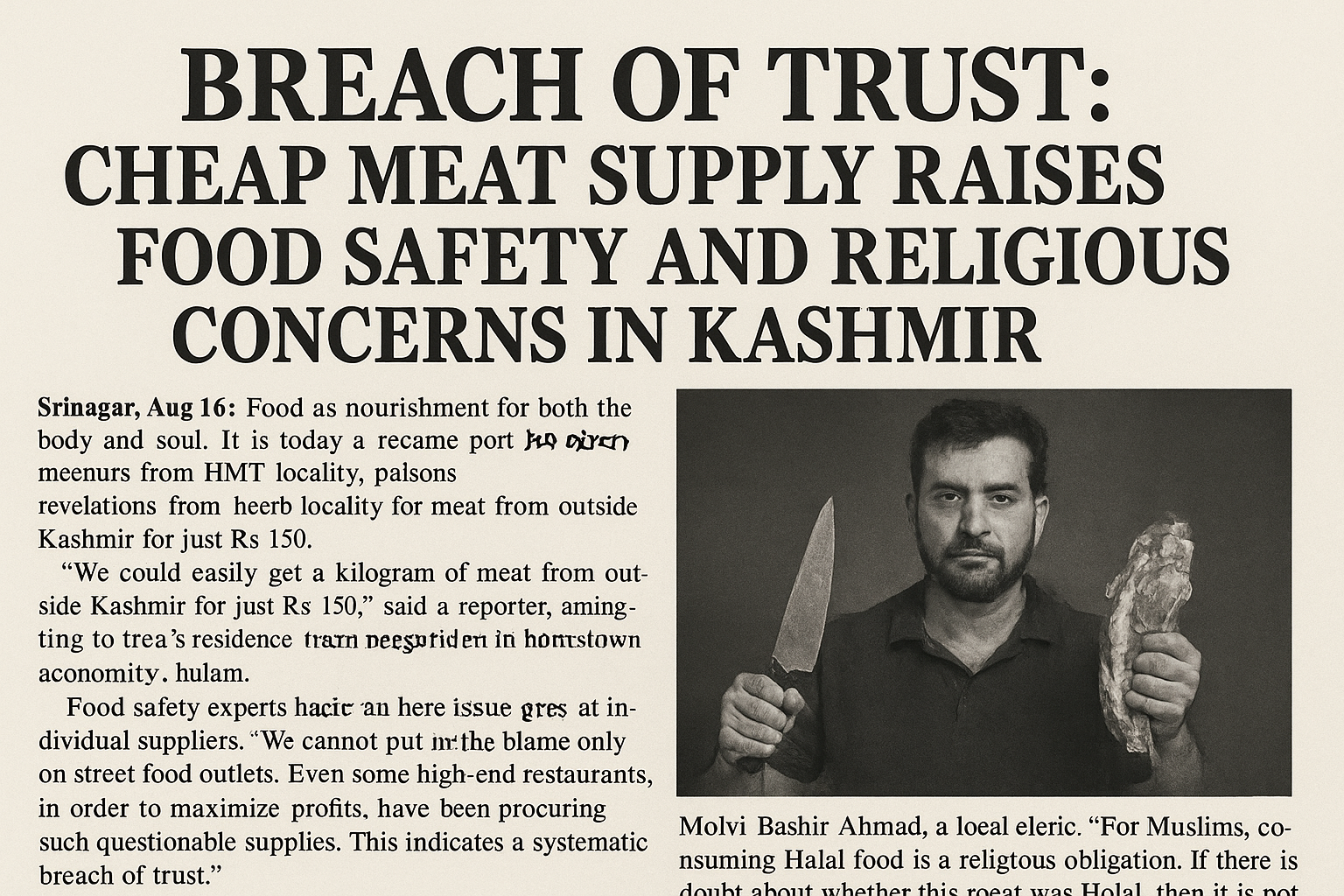
Molvi Bashir Ahmad, a Srinagar-based cleric, voiced deep concern: “If there is even a shadow of doubt about Halal, consumption becomes impermissible. This is not just about food — it is about our duty to God. Those who knowingly deceived people have sinned gravely.”
The Consumer’s Anguish
For ordinary residents, the breach of trust cuts deep. Abdul Rashid, a shopkeeper from Bemina, said: “We grew up believing Kashmiri food is sacred. We trusted restaurants, we trusted meat suppliers. To learn that we may have been eating substandard or even Haram meat for years feels like a betrayal of both faith and health.”
Homemakers feel equally betrayed. Shazia, from Rajbagh, said: “We paid hard-earned money thinking we were buying the best for our families. Instead, we were fed lies and filth. How can we trust any food outlet now?”
Regulatory Failure
Food safety experts say the scandal exposes glaring lapses in enforcement. A senior officer of the Food Safety Department, speaking off the record, admitted: “The system failed. Random inspections were rare, and the sheer scale of food trade made it easy for such practices to go undetected. But the bigger question is — why was this allowed to continue for nearly two decades?”
Civil society voices argue that authorities cannot absolve themselves of responsibility. Advocate Imran Nabi said: “This is not a small violation. It is a systematic scam. If regulators had been vigilant, this would never have lasted so long. Accountability must start at the top.”
A Blow to Kashmiri Identity
Wazwan, the traditional Kashmiri feast, is central to the Valley’s cultural and social identity. To many, the scandal represents an attack on that very heritage.
The Way Forward
Public anger is mounting, with calls for a full-scale investigation, stricter checks on meat imports, and clear certification mechanisms to guarantee both quality and Halal authenticity.
As one young entrepreneur, Aamir from Nowhatta, summed it up: “Kashmiris have been cheated. What we thought was nourishment has become poison. Unless strict action is taken, people will lose all faith in what they eat.”
For now, one truth is undeniable: in Kashmir, food — once considered the bond between culture, community, and faith — has become a symbol of betrayal. Rebuilding trust will require more than apologies; it will require accountability.


