


Syed Snowber
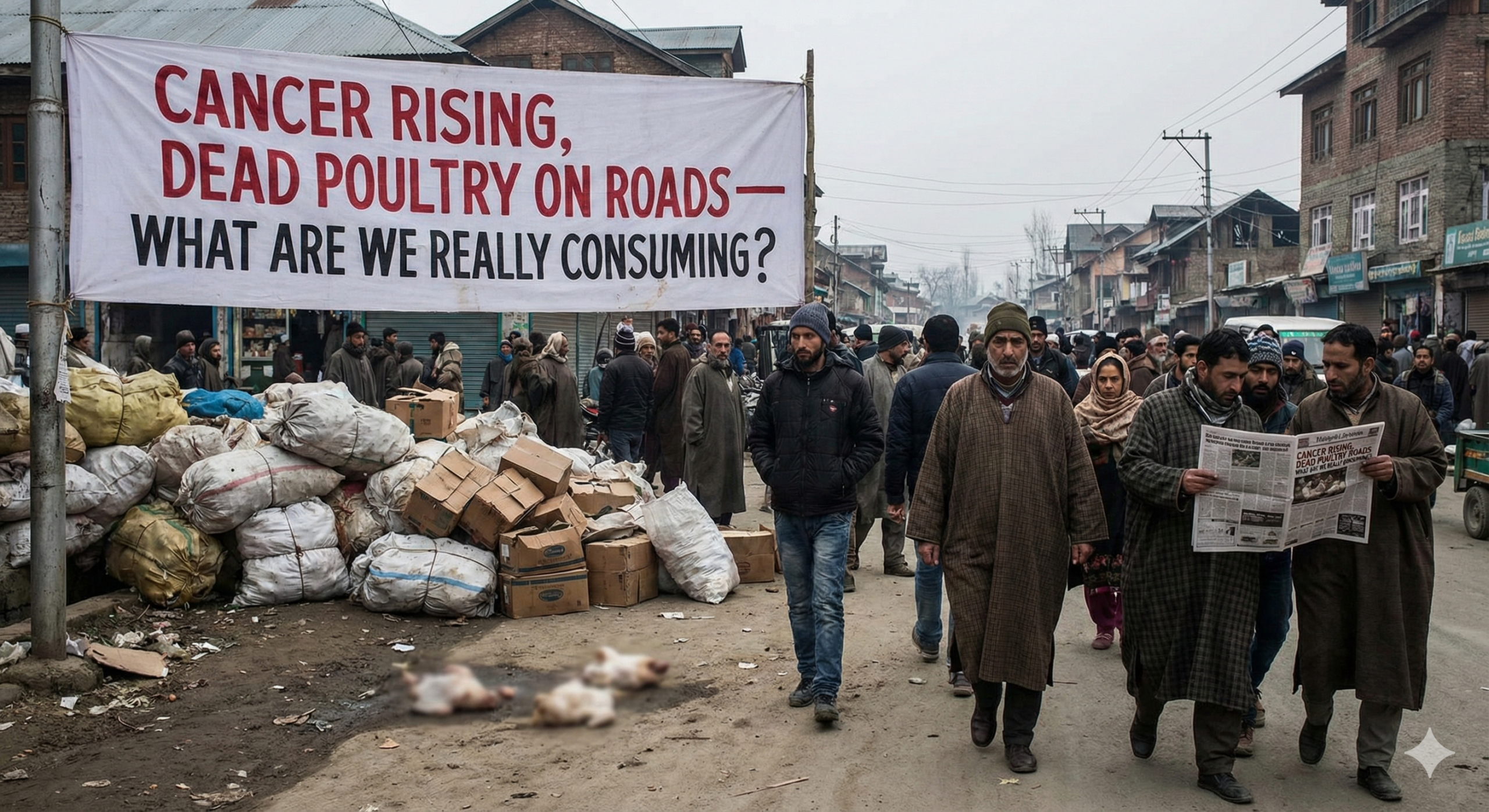
Kashmir woke up today to two headlines—each unsettling on its own, but terrifying when placed side by side. In one case, 119 dead chickens were found in a truck reportedly declared ‘clean’ by officials, stirring outrage and disbelief among citizens. The second, equally grim revelation, was data showing that Jammu and Kashmir is recording nearly 38 new cancer cases every day, amounting to over 67,000 cases in five years.
Separate stories, yet disturbingly connected by one question: Is what we are eating slowly killing us?
This isn’t the first time public faith in the food system has been shaken. Not long ago, a consignment of rotten mutton was detected at the Industrial Estate Zakura, triggering shock across the Valley. Social media raged for days, statements were issued, and then—silence. No transparent outcome, no sustained accountability, and no reform that citizens could see. Life moved on. So did the food on our plates.
But with every such incident, an old worry resurfaces: How safe is the food consumed daily by millions of Kashmiris?
We live in a region where meat, poultry, bakery items and processed foods form a significant part of the diet. Yet, inspection mechanisms are sporadic, regulatory actions often reactive, and public updates minimal. A truck labelled ‘fit for consumption’ despite carrying dead birds doesn’t just hint at negligence—it signals a frightening possibility of a breakdown in oversight.
Cancer numbers add another layer to this growing anxiety. Experts attribute the rising burden to multiple factors—lifestyle changes, sedentary patterns, tobacco use, processed food, and high salt intake. But when contaminated meat, questionable poultry handling and unhygienic slaughter practices enter the conversation, the line between lifestyle disease and systemic negligence becomes thin.
People are asking questions, and rightly so.
What checks are being done on what enters the market each morning?
Who ensures that the meat we buy is healthy?
Are inspections routine or ornamental?
Is profit overshadowing public health?
Kashmir deserves answers more concrete than a notice here, a press release there, or raids after outrage. Food safety cannot be seasonal, episodic, or triggered only by scandal—it must be a continuous system.
If we can detect dead chickens on a truck, then we should be able to trace responsibility. If cancer numbers are rising daily, then prevention cannot begin only inside hospitals. If people are consuming what they trust, then trust must be protected by a transparent, accountable framework—not headlines.
The conversation should not end with shock. It must begin with resolve.
Because at the end of the day, beyond politics, beyond inflation, beyond every debate that pulls us apart—what unites us is the food we eat. And if that is unsafe, nothing else matters.
The Author is an Educator


