


The Biz Reporter
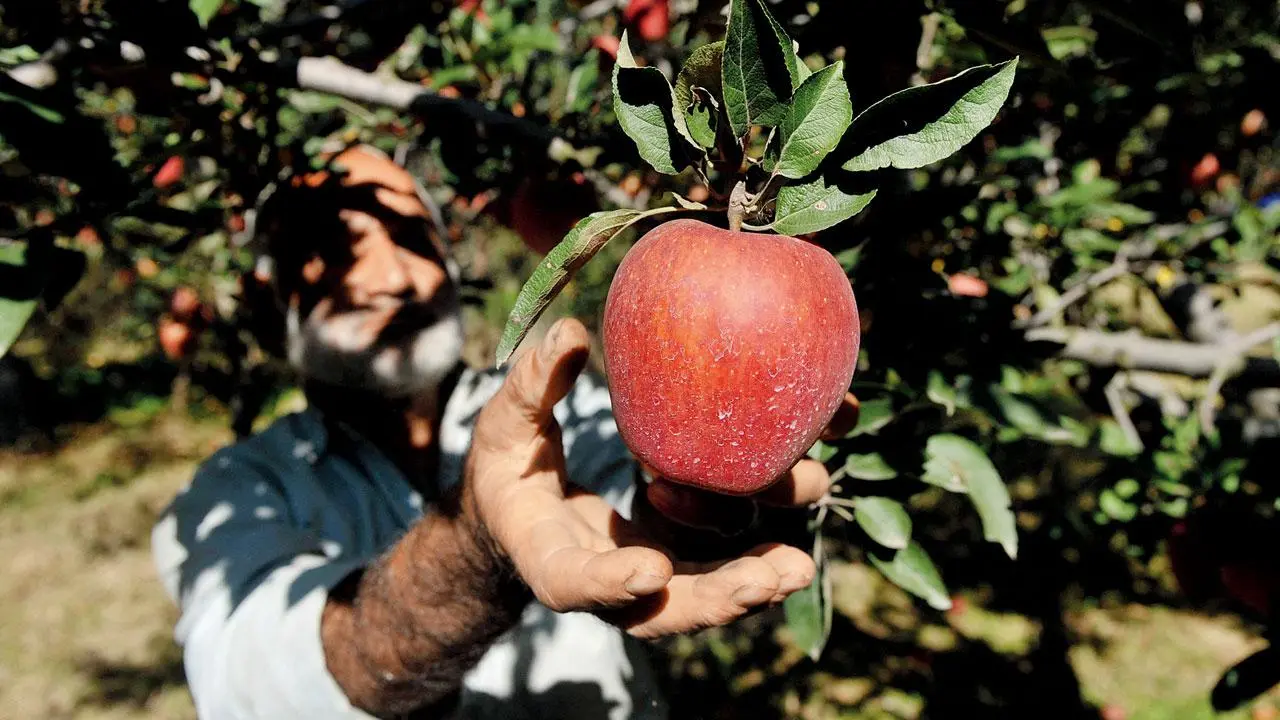
Srinagar: The conclusion of the long-awaited free trade agreement (FTA) negotiations between India and New Zealand has brought renewed focus on Kashmir, the country’s largest apple-producing region, with growers and policymakers weighing both the opportunities and challenges arising from the deal.
Under the agreement, New Zealand will receive limited preferential access for apples to the Indian market through a tariff-rate quota, while India has retained safeguards such as minimum import prices and seasonal restrictions. Apples, which currently attract a 50 per cent import duty, will be allowed imports within a quota starting at 32,500 metric tonnes (MT), rising to 45,000 MT over six years, at a reduced duty of 25 per cent. Shipments beyond this quota will continue to face the full 50 per cent duty, along with a minimum import price of $1.25 per kg.
Commerce Minister Piyush Goyal said the agreement was built around complementarity rather than competition, stressing that sensitive sectors had been protected. Chief negotiator for the India–New Zealand FTA, Petal Dhillon, said market access had been carefully designed using tariff-rate quotas, minimum import prices and seasonal restrictions to avoid disruption to domestic producers, particularly in horticulture-intensive regions such as Kashmir.
However, economists and sector experts in the Valley have cautioned that the deal should be viewed as an early warning for long-pending structural reforms in horticulture.
Former finance minister Dr Haseeb Drabu, in a social media post, said the sector must brace for tougher times ahead. “Tough times ahead for horticulturists of the Valley. The only way to survive the death knell is to get competitive. Easier said than done. Local government must plan mitigating policies; enhancing yield, cutting costs and lowering climate risk,” he said.
Drabu noted that while the immediate impact of the FTA on Kashmir apples would be moderated by the tariff-rate quota mechanism, complacency could prove costly. “The immediate impact will be dampened by the tariff-rate quota. But growers and the government need to prepare. Lower import duty cuts prices by 20 per cent, and imports grow by 30 per cent,” he said, adding that preferential access under the agreement has been limited to the counter-seasonal window when Kashmir apples are not in harvest.
Government officials have highlighted that the agreement also opens the door for deeper cooperation in agricultural technology, particularly in apples and kiwi fruit. New Zealand’s apple productivity stands at 53.6 MT per hectare, compared with India’s 9.2 MT per hectare, a gap that is especially relevant for Kashmir’s ageing orchards. In return for market access, New Zealand has committed to sharing expertise in planting techniques, orchard management, productivity enhancement, supply-chain development and modern packaging.
India has retained the right to withdraw concessions if agreed safeguards are violated, officials said. Bilateral trade between the two countries stood at $2.1 billion in FY2025, with both sides aiming for a significant expansion over the next five years.
For Kashmir, which anchors India’s apple economy, the FTA has underscored the urgency of modernising orchards, improving yields and building climate resilience. While the deal may have a limited immediate impact, it has sharpened the debate on how the Valley’s horticulture sector prepares for a more competitive future.


